
Why Lower Back Pain Returns After Injury
For Active Adults in Newport Beach and Beyond
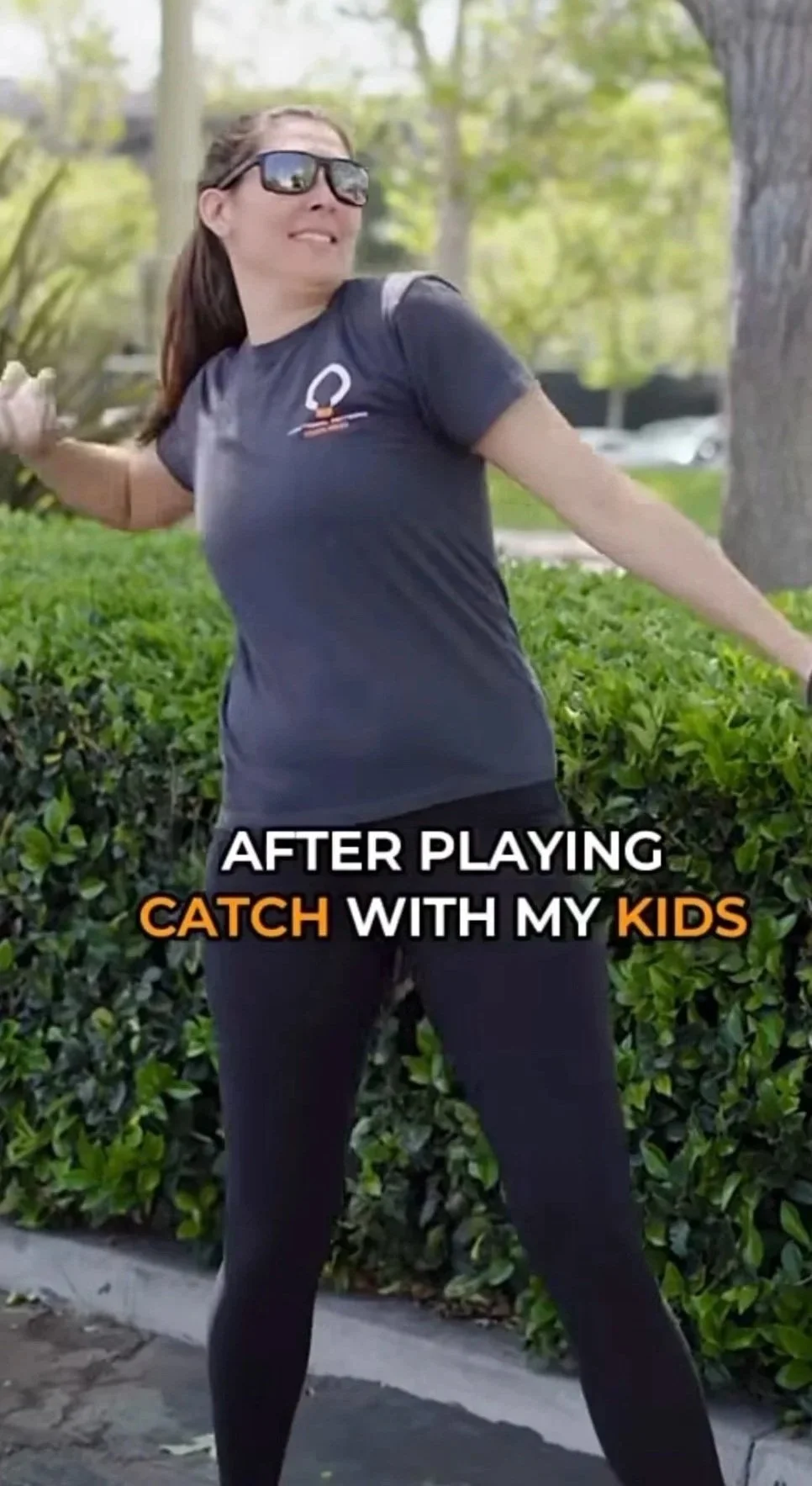
When my son Reid started playing baseball, we began spending more time outside playing catch.
I grew up playing softball, so grabbing a glove and throwing with him felt natural. But after a few sessions, something interesting happened—my lower back started getting tight.
It wasn’t sharp pain—just that familiar stiffness that tends to show up in the morning that reminds you your body hasn’t been doing that movement for a while.
Sound familiar? If your back tightens up when you get back into activity, you’re not alone—and there’s a reason why.
Let’s figure it out. 👉 Schedule an Initial Consult
It also reminded me of something I often see among active adults and athletes here in Newport Beach: lower back discomfort that returns once people start moving more, especially after an injury or time away from activity.
Rotational sports like baseball, golf, and tennis tend to reveal this pattern quickly.
Why Rotational Sports Stress the Lower Back
Throwing a baseball or swinging a bat may look simple, but these movements rely on coordinated rotation through several parts of the body:
Hips
Thoracic spine (mid-back)
Shoulders
When these areas share the workload, rotation is distributed efficiently throughout the body. But when one part of that chain is restricted—most commonly the thoracic spine—the body looks for movement elsewhere.
👉 This is often why stretching alone doesn’t fix the problem—if the movement pattern hasn’t changed, the stress just keeps going back to the same place.
Most often, that “somewhere else” becomes the lower back.
The Thoracic Spine: The Body’s Rotation Engine
The thoracic spine, or mid-back, is designed for rotation. When it’s not moving well, something else has to.

However, several modern habits can reduce mobility in this region:
Prolonged sitting
Workouts focused only on forward/backward movement
Limited rotational training
When the thoracic spine becomes stiff, research shows that limited mobility in one area can increase stress on neighboring joints during movement.
The problem is that the lumbar spine isn’t built for large amounts of rotation. Over time, that added stress can lead to recurring tightness or irritation.
So even though the lower back is where you feel it, it’s often not where the problem starts—it’s just where the stress shows up.
Why Lower Back Pain Often Returns
After Injury
Another reason symptoms return is that pain reduction isn’t the same as restoring full capacity.
After injury or physical therapy, people often feel significantly better—but the body may still be unable to tolerate the same loads it handled before.
When activity increases again—throwing, lifting, running, or playing sports—the lower back often becomes the area that absorbs that excess stress.
This is why symptoms tend to return when people:
Return to exercise
Increase training volume
Resume rotational activities
This is where many people get stuck—the pain is gone, but the body isn’t yet fully prepared for the demands of activity.
That’s why simply “getting back into it” often leads to the same issue returning.
👉 Learn more about how to bridge the gap after physical therapy
Exercises That Help Restore Rotation and Reduce Stress on the Lower Back
When the thoracic spine isn’t rotating well, the goal isn’t simply stretching. The body needs to be retrained.
awareness → mobility → control → coordinated movement
The drills below help retrain that process.
Thoracic Extension Awareness on a Dowel
Before improving rotation, many people first need to regain awareness of how to extend through the thoracic spine without increasing arch in the lower back.
Lying on a small diameter dowel placed along the spine can help guide this.
The goal is to gently extend through the mid-back while preventing the rib cage and pelvis from separating.
This helps reinforce thoracic extension without increasing lumbar lordosis.
Supine Ribcage Rotation Press
This drill encourages the rib cage to rotate while the shoulder remains stable.
Setup:
• Lie on your back with knees bent
• Hold a light dumbbell in one hand
• Elbow stays at 90° by your side
Press the dumbbell toward the ceiling while slowly rotating through the rib cage and upper back.
The goal is to allow rotation of the thoracic spine while keeping the lower back relatively quiet.
Perform 6–8 controlled reps per side.
Split Squat Cable Rotation
Once mobility improves, rotation needs to be integrated with the hips and pelvis.

Setup:

- Cable machine positioned to one side
- Step into a split squat stance

Rotate slightly away from the machine while maintaining balance and control.

This helps coordinate the hips, pelvis, and rib cage.

Perform 6–10 reps per side.
Pallof Press (Anti-Rotation Control)
Rotational athletes don’t just need mobility—they also need the ability to resist unwanted rotation.
The Pallof press trains the trunk to stay stable while the body is challenged by rotational forces.
Standing perpendicular to a cable machine, press the handle straight out in front of you while resisting the pull of the cable. Hold briefly before returning. Perform 6–8 reps per side.
Because the obliques help connect the rib cage to the pelvis, this exercise also reinforces how the trunk and hips work together to control rotation.
When that connection is working well, the body can better manage force—so the lower back isn’t left to compensate.
Integrated Movement Patterns
As coordination improves, the goal isn’t just to combine exercises—it’s to integrate movement across the entire body.
Dynamic, rotational movements train the body to manage force through the hips, trunk, and upper body simultaneously—rather than isolating any one area.
This is what it looks like when rotation is coming from the right places instead of being dumped into the lower back.
Once that coordination is established, more force can be introduced. The kneeling position limits lower-body compensation, making it easier to focus on generating and transferring rotational power through the hips and trunk.
When the body can control rotation first, then express it with speed and power, the lower back is no longer forced to pick up the slack.
This is also why strength alone doesn’t fix the problem—if force isn’t being transferred well, something still takes on more stress than it should.
👉 This is where building strength with control becomes the difference between feeling better temporarily and actually fixing the problem.
A Quick Note on Foam Rolling

As important as these movement patterns are, they don’t exist in isolation.
If certain tissues are stiff or restricted, it can limit how well the hips and thoracic spine contribute, making it harder to restore proper movement and force distribution.
That’s where mobility work can help—but only when it’s applied with intention.
Many people default to foam rolling or stretching areas that feel tight. But what feels tight isn’t always what’s actually limiting movement.
Without assessing what’s truly restricted, it’s easy to spend time on the wrong areas while the real limitation goes unaddressed. I wrote more about that here: Foam Rollers: Road to Recovery or Circle of Death, or if you’re trying to stay active without constantly dealing with flare-ups, I share real-life examples and simple breakdowns like this on Instagram
For Active Adults in Newport Beach
If you’re an active adult dealing with recurring lower back tightness, the problem usually isn’t your lower back—it’s how movement and force are being distributed through your body.
When the hips and thoracic spine aren’t contributing enough rotation, the lower back is forced to compensate. Over time, that’s what leads to repeated flare-ups. Restoring rotation where it’s missing can offload the lumbar spine, improve your movement, and help you stay active—whether that’s in sports, workouts, or everyday life. This is especially common for people returning to activity after time off or after physical therapy.
Not Sure Where to Start?
If you're experiencing recurring back tightness when returning to activity, it may help to look at how your body is moving, not just where it feels tight.
If your back keeps tightening up every time you get back into activity, there may be a limitation in movement, strength, or your body's ability to handle the demands you're placing on it.
An Initial Consultation can help identify what's limiting you and determine the best place to start