
What Comes After Physical Therapy? How to Safely Return to Training

You finished physical therapy. The pain is better, or maybe even gone, and you’re ready to go on that run.
But the thought of re-injuring it still lingers.
You tell yourself you’ll just “take it easy.” But what does that actually mean?
But you still go out for a run. Maybe you feel good that day… maybe even for a week.
Until that familiar feeling starts to creep back in.
Sometimes it’s the same pain….Sometimes it’s something different.
And now you’re right back in that spot— wondering if you did too much… or not enough. THIS is where most people get stuck.
Where Physical Therapy Gets You (and Where It Stops)
Physical therapy is incredibly valuable. My go-to PT in Costa Mesa is REO Physical Therapy—tell Anna I said hi.
Physical therapy helps you get back to activities of daily living:
standing up from bed without back pain, putting on your shirt without shoulder pain, and moving through your day more comfortably.
But most people don’t just want to feel “functional.”
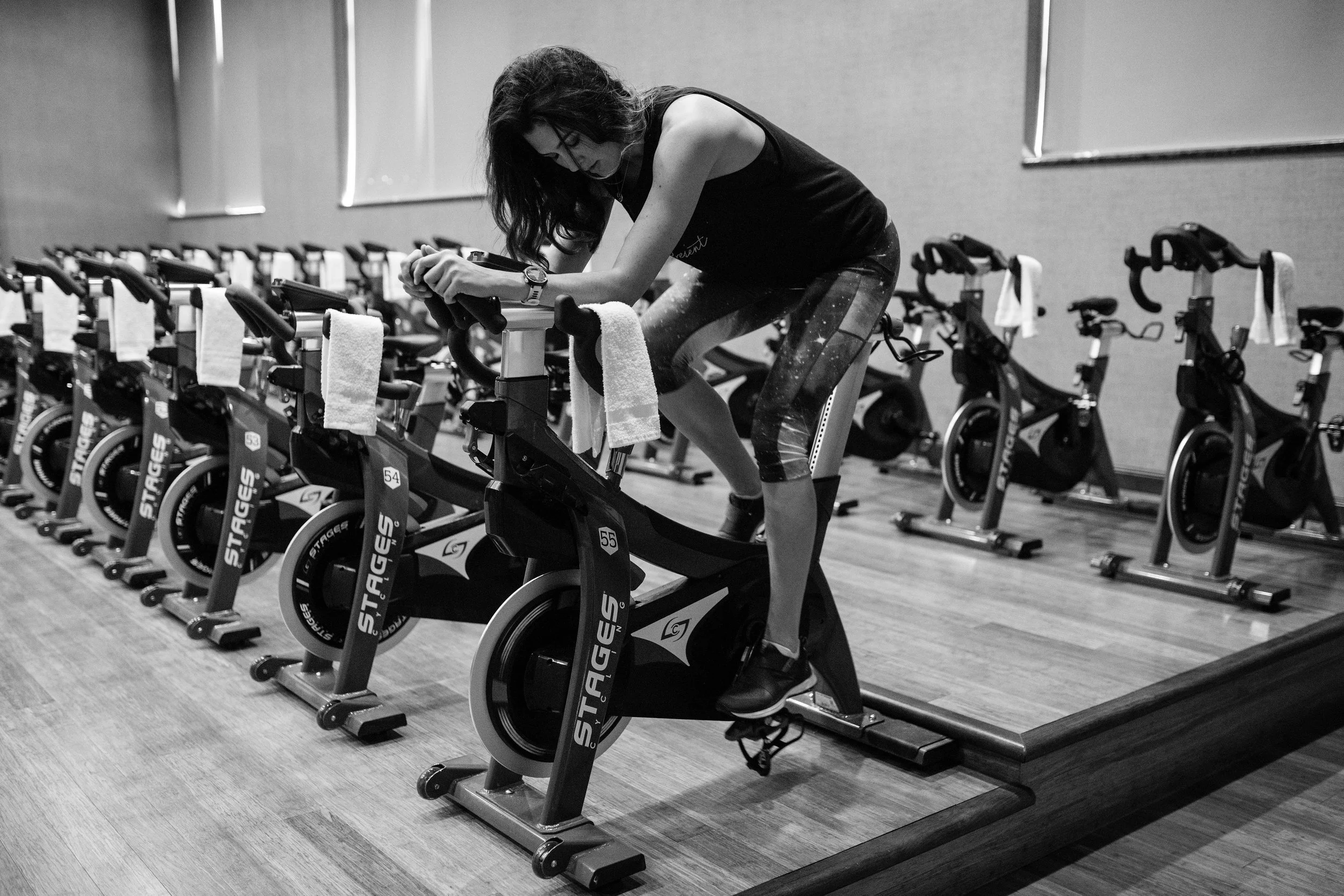
They want to get back to pushing again. Pushing hard up a hill on a trail run, hitting that next PR on the bike, or getting back to workouts without hesitation.
That’s where the gap starts to show.
Being pain-free in everyday movement doesn’t always mean your body is ready for higher levels of load, speed, or intensity.
Pain is just one piece of the puzzle.
What often hasn’t been fully rebuilt yet is:
Load tolerance
Coordination under movement
The ability to handle speed, force, and rotation
So when you go back to your normal activities, your body finds a way to get the job done—even if it means compensating.
And over time, that’s what brings the pain back.
The Missing Step
Most people leave physical therapy feeling better—but not fully prepared for real-life demands.
There’s a gap between “I feel better” and “I can handle what I used to do.”
That gap is where most reinjuries happen. This is where many people feel stuck—better, but not fully ready.
👉 Learn more about post-physical therapy training
If the body isn’t ready, something else takes on the stress—often the lower back, knees, or shoulders.
What This Can Look Like in Real Life
I had a client, Cindy, who came to me after physical therapy.
She’s not your typical “active adult.” She’s in her 70s, has scoliosis, and when we first started working together, much of the movement had to be done seated.
She was dealing with:
internal discomfort
pinching in her hip
difficulty getting up from the floor
and a general lack of confidence in her movement
I started by meeting her where she was. Over time, things began to change.
She went from needing to perform exercises seated… to standing… to now moving through them with control and confidence.
Her strength improved. She can get up off the ground without her knee collapsing. She’s in less pain.
And more importantly, she’s living her life.
She goes on cruises with her family every year, and now she’s not worried about falling or limiting what she can do while she’s there.
She’s one of my strongest clients—and an absolute BAD ASS.
If you’re in that same spot—feeling better, but not fully confident—this is exactly what I help people through.
We’ll talk through what’s going on and figure out what your body actually needs next. If you’re someone who likes to understand the bigger picture, this is how I guide people through that process:
What a Safe Return to Training Should Look Like
Most people don’t need more exercise—they need a better way to approach the process.
That might mean advocating for yourself a little more after PT—asking questions and understanding what you should actually be feeling, not just going through the motions.
It might mean filming yourself here and there—not like an influencer—but just to see what your body is actually doing. Because what you think you’re doing and what’s actually happening are often very different.
And honestly… a lot of it is just giving your body a little more time than you want to.
Not in a “do nothing” kind of way—but in a way that respects where you’re at right now instead of where you wish you were.
Because rushing that part? That’s usually what puts people right back at the beginning.
Most people don’t get stuck because they’re not working hard enough.
They get stuck because they don’t have a clear path forward.
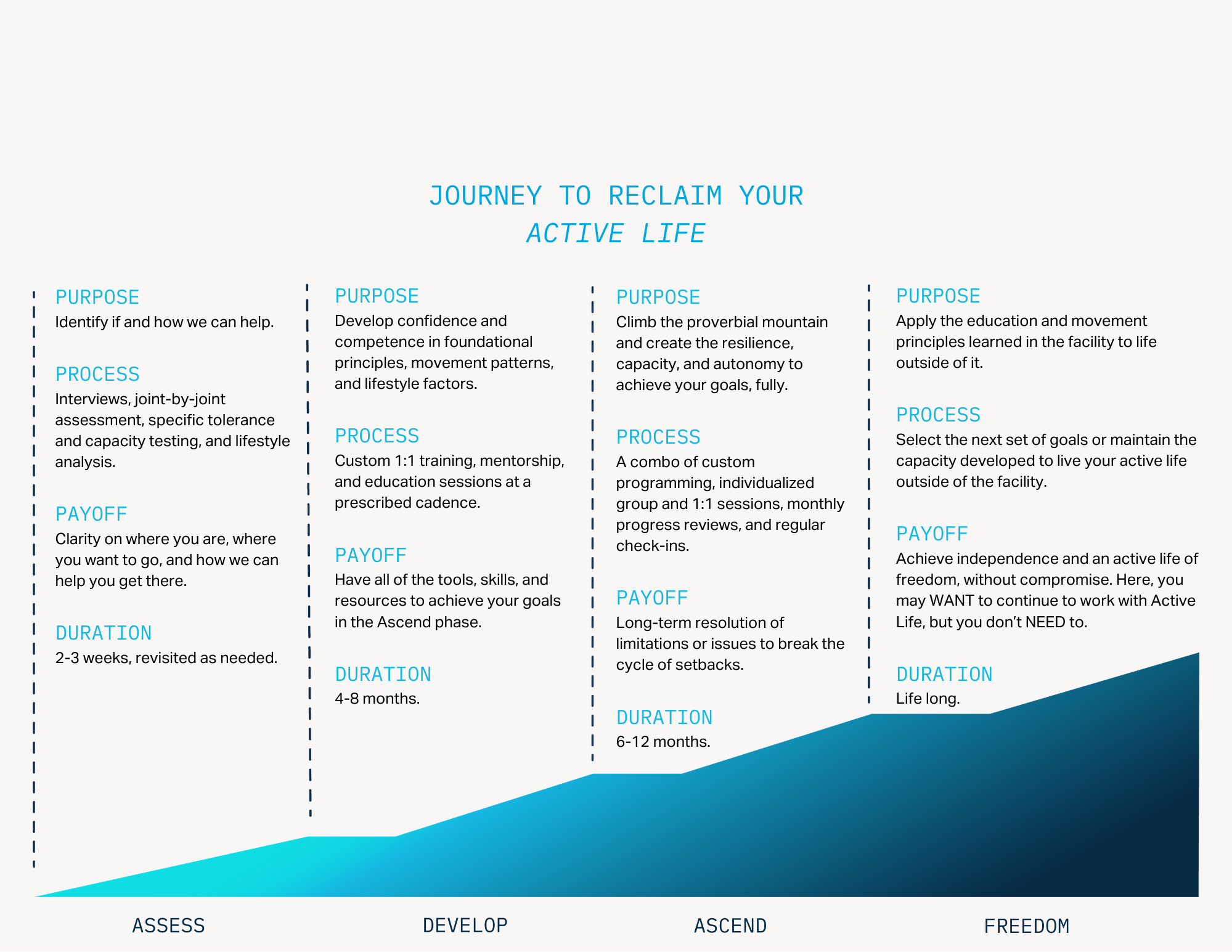
This is how I approach it:
1. Assess where you are
Figure out what you can’t control, where you’re compensating, and where you’re actually lacking capacity.
2. Develop a plan around that
Not random exercises—but targeted work that matches where your body is right now.
3. Ascend with intention
As your control improves, we layer in more load, speed, and complexity—without skipping steps.
4. Build Freedom
The goal isn’t to rely on me forever. It’s to understand what your body needs so you can keep progressing on your own.
And if you need help along the way—whether that’s refining your movement, progressing your program, or working through a setback—I’m here for that.
If you’re working your way back from an injury—or just tired of feeling stuck in the same cycle 👉 Schedule an Initial Consult
We’ll figure out where you’re at, what’s missing, and what the next step should actually look like for you.