
Why Breathing Matters More Than You Think (For Pain, Movement, and Recovery)

Most people don’t think about how they breathe.
They just notice something feels off.
Tightness that keeps coming back.
Feeling unstable in certain movements.
Constantly needing to stretch the same areas.
If you’ve been trying to fix this with stretching or foam rolling, but it keeps coming back, you’re not alone. I wrote another blog about stretching, too. Click HERE to give it a read.
If you’ve been dealing with recurring tightness, feeling unstable in certain movements, or constantly needing to stretch the same areas… there’s often a missing piece.
Not sure what your body actually needs next? Let’s figure it out.
Breathing Is More Powerful Than It Seems
One reason breathing gets overlooked is that it feels automatic. But the way you breathe directly affects how your body moves, handles stress, and recovers. Not just in extreme situations—but in the small, everyday patterns that add up over time.
And if those patterns aren’t working well, your body will find another way to compensate.
That can show up in how you move, how you handle stress, how well you sleep, and even how your body responds to everyday demands—often without you realizing it.
Where You Breathe Matters
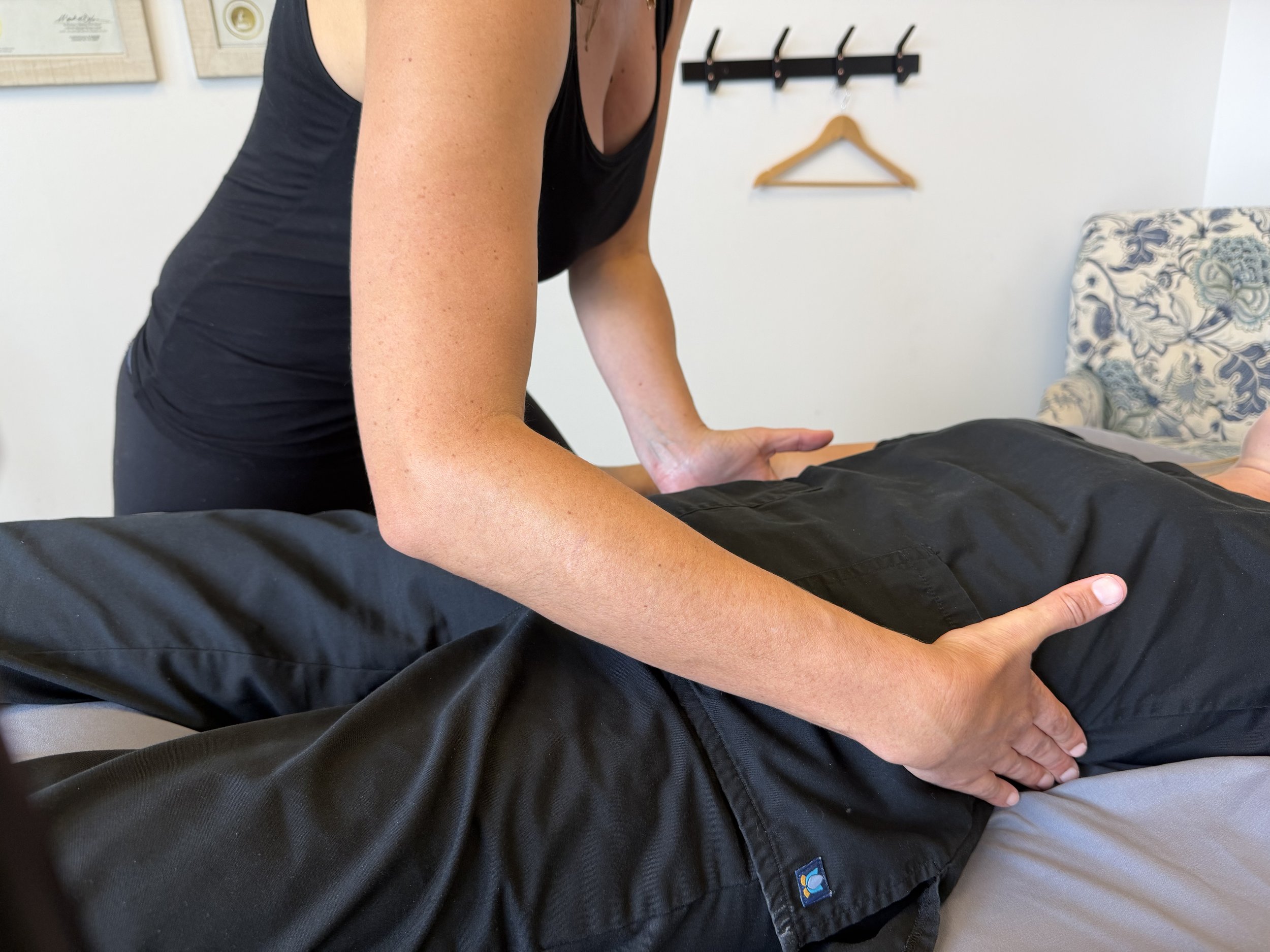
This is something I often guide in sessions—using hands as feedback to help direct the breath into areas that aren’t expanding well
Your body will always take the path of least resistance.
So if certain areas are stiff or restricted, your breathing will shift to another area.
For example:
If your ribcage doesn’t expand well, you may default to breathing into your chest or neck
If your lower back or surrounding tissues feel tight, you may avoid expanding into that area
If you tend to hold your breath, your ribcage can stay compressed and be harder to move
When that happens, your body still has to find a way to move—so it compensates. Over time, this changes how your body handles movement.
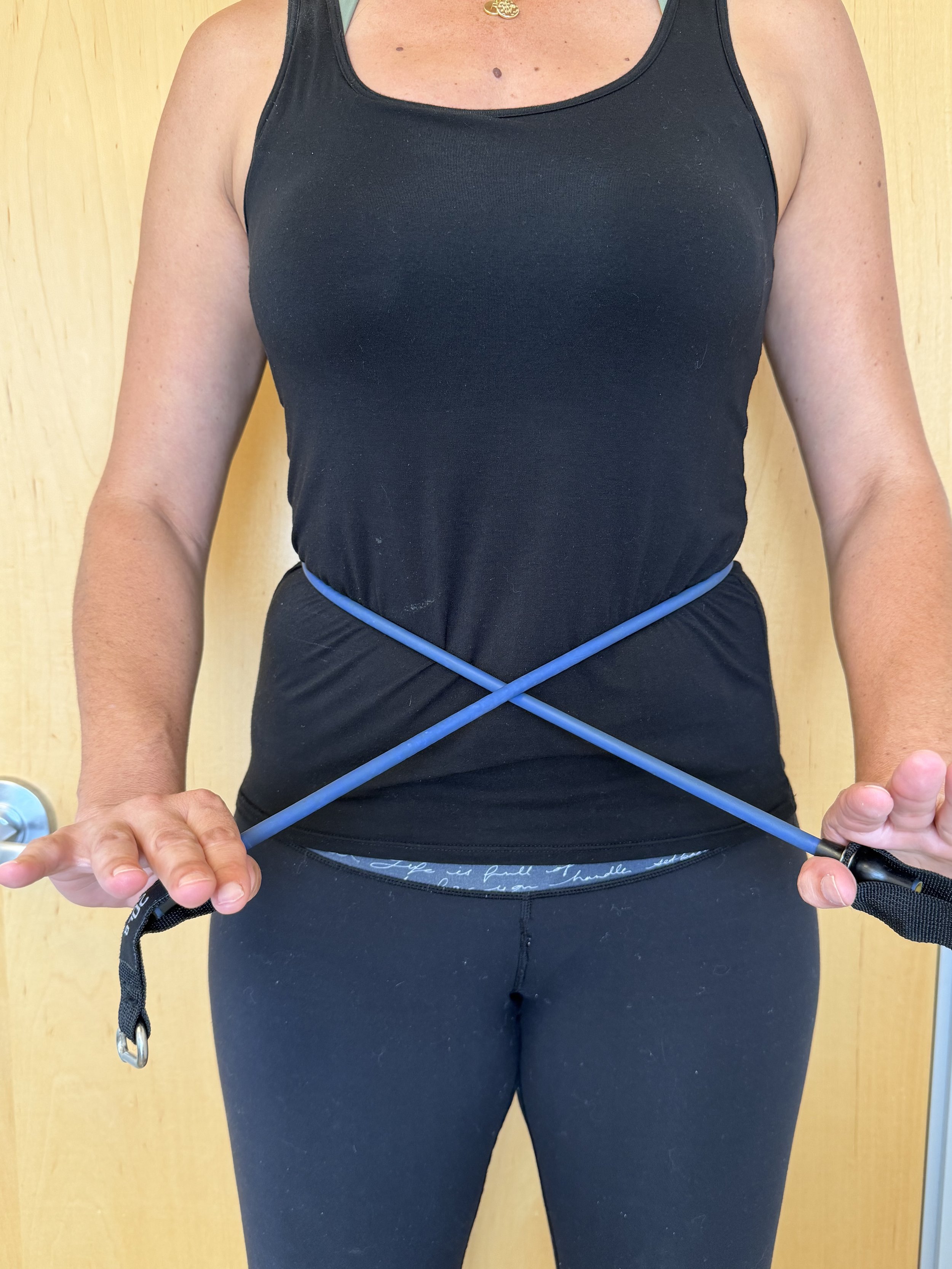
If you’re on your own, a band can give you similar feedback—helping you feel expansion into the sides of your ribcage instead of just pushing forward into your stomach
👉 If your body doesn’t feel stable, it will create tension to protect you. A ribcage that doesn’t move well doesn’t rotate well.
And if rotation doesn’t happen through the ribcage… it often gets pushed into the lower back instead. I wrote a blog about lower back pain and rotation. After you’re finished with this blog and want to learn more, click HERE.
Breathing, Stress, and Sleep
Your breath doesn’t just affect how you move—it directly affects how your body feels.
One of the main reasons for that is how your body responds to carbon dioxide (CO₂).
Your body uses CO₂ levels to decide when you need to breathe. As CO₂ rises, your brain creates the feeling that you need more air.
When your tolerance to CO₂ is low, you feel the need to breathe more often, your breathing becomes faster and shallower, and your body stays in a more “on edge” state.
This is where breathing and stress connect.
Fast, shallow breathing—especially through the mouth—signals your body that something is wrong.
Slow, controlled breathing—especially when you can stay relaxed during the pauses—signals your body that it’s safe.
If you’re not sure what that feels like, something guided like this can help you practice staying relaxed while breathing less.
Over time, if your breathing stays fast and shallow, your body can remain in a heightened state of stress—even when nothing is actually wrong.
And when your body feels stressed… 👉 it’s much harder to relax, recover, or sleep well.
This is one of the reasons your breathing can have such a direct impact on both stress and sleep.
I also love Tim Hall for Breathwork Training.
Why Nasal Breathing Matters
If breathing is part of the problem, it also becomes part of the solution.
Instead of trying to constantly stretch or release what feels tight, the focus shifts to how your body manages pressure and control.
Start by paying attention to your breathing patterns.
Where do you naturally feel your breath? High in your chest? Only into your stomach? One side more than the other?
From there, begin to explore breathing low and wide—allowing your ribcage to expand instead of lifting through your chest or holding your breath. Once you start to change how you breathe, it doesn’t just stay there. It starts to show up in how you move.
And this is where it begins to carry over into your training.
Breathing, Bracing, and Strength
Breathing doesn’t just affect how you feel—it directly affects how you move and handle load.
In strength training, we’re often taught to brace—especially during movements like a squat. And that’s not wrong.
Creating pressure through your trunk helps stabilize your spine and allows you to handle heavier loads safely.
Think of your core like a can. When it’s pressurized and intact, it can handle force and distribute load effectively.
But if that can is dented, it changes how well it can handle pressure. Instead of distributing force evenly, certain areas take on more stress.
And here’s where it matters: Humans don’t just brace—they also have to breathe. If the only time your body can create stability is when you’re holding your breath, you’re missing part of the system.
So when any part of that system isn’t doing its job, the body has to compensate somewhere else.
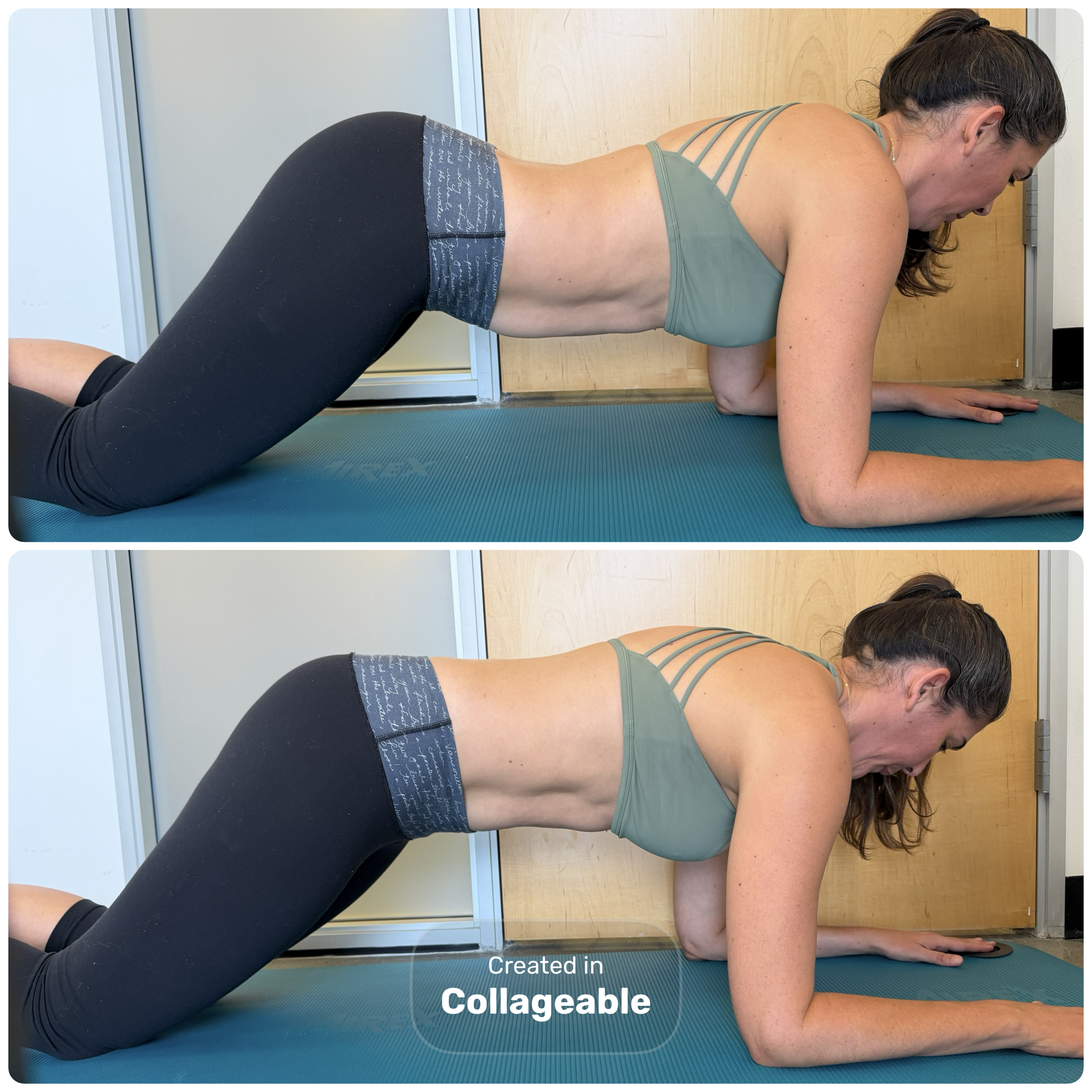
In the top image, the stomach pushes forward, and the lower back takes over.
Even though this looks like a plank, the anterior chain isn’t actually doing its job—it’s distended and not creating useful tension.
Instead of the trunk managing pressure, the body finds another way to stay upright—often by overusing the lower back.
Over time, this is where people start to feel:
tightness in the lower back
discomfort during core work
or pain that shows up during or after training
On the bottom, the trunk stays controlled, and the body stays stacked.
Instead of one area taking over, there’s a balance between the anterior and posterior chain.
That balance allows the body to create pressure more naturally—without having to over-brace or hold your breath.
This is the difference between:
just “doing” an exercise
and actually training your body to manage load and movement. The goal isn’t to avoid bracing—it’s to be able to create pressure when you need it, and maintain control when you’re breathing normally.
That’s what makes strength actually carry over—beyond just one moment.
Want More Like This?
If you’re trying to stay active without constantly chasing tightness or flare-ups, I share real-life examples and simple breakdowns like this on Instagram.