
Knee Pain While Running: What the Timing of Your Pain Can Tell You
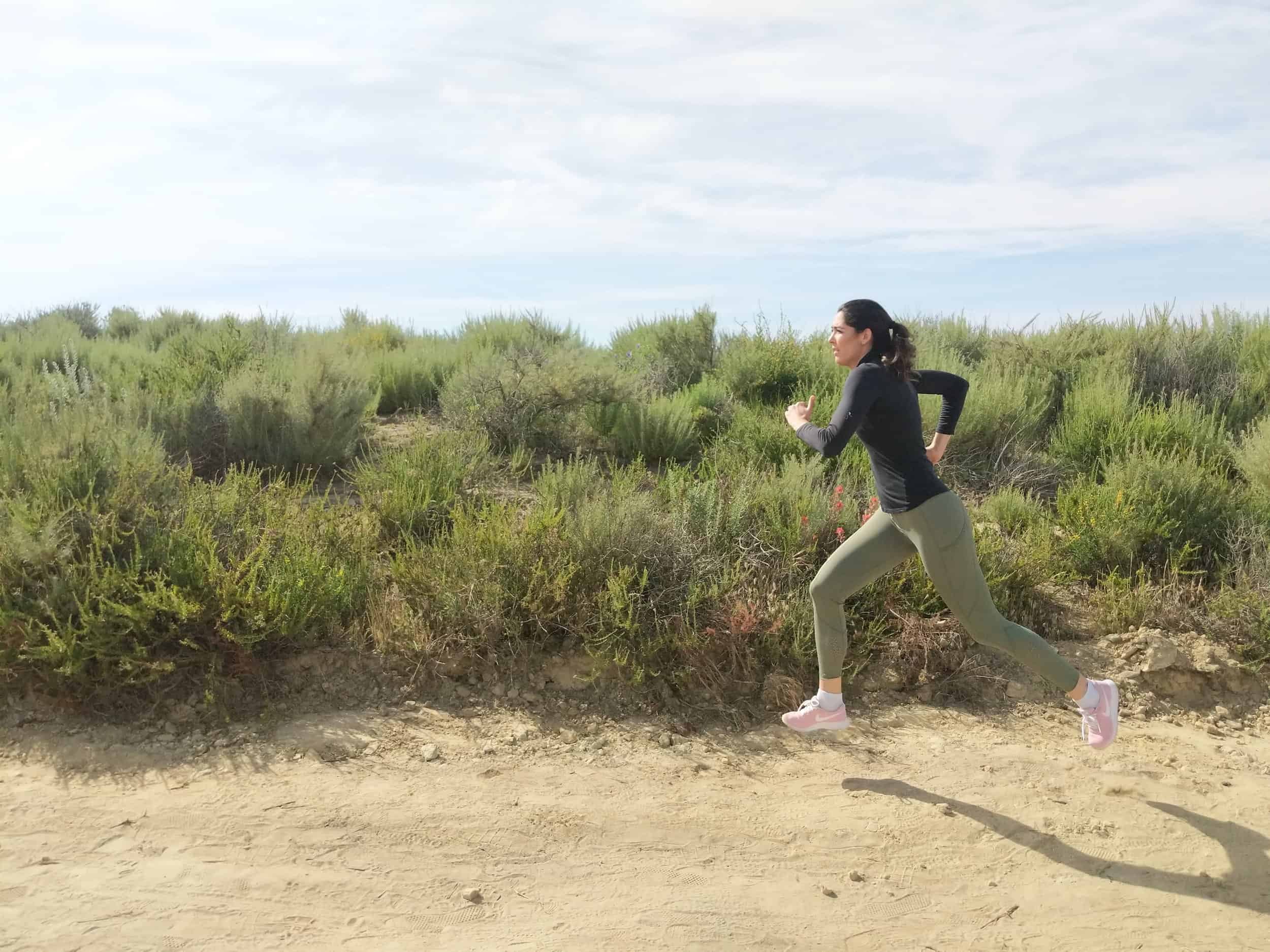
You start training for something. Maybe it’s your first 5K. Maybe it’s a half marathon. Maybe you finally committed to a marathon, a HYROX, a hiking trip, or another event that’s been sitting on your bucket list for years. Training is going well. You’re adding miles. You’re getting stronger. You’re starting to feel like, Okay, I can actually do this.
And then BOOM. Your knee starts to hurt.
At first, it’s not that bad. Maybe it’s only a little ache after a run, so you take a few days off. The pain goes away, you start running again, and everything seems fine. BUT as soon as you start training again, it comes back.
So now you stretch more. You foam roll. You ice it. You take Tylenol or Advil. Maybe you buy a knee sleeve. You back off for another week, then start training again because the event date isn’t moving just because your knee hurts. And eventually, you start trying to push through it.
But what if the pain isn’t just something you need to get rid of? What if it’s giving you information?
The question isn’t always, “Why does my knee hurt?” Sometimes the better question is: What part of this activity is my body having trouble tolerating?
When the pain starts, what makes it worse, and how your knee responds afterward can all give us useful clues.
Knee pain that appears in the first few minutes of a run may point us in a different direction than pain that consistently shows up around mile nine. Knee pain that appears in the first few minutes of a run may point us in a different direction than pain that consistently shows up around mile nine. And pain that appears primarily when running downhill gives us another clue about the demand your body may be struggling to tolerate.
The location of the pain matters. But so does the demand that exposes it.
Knee Pain on Long Runs: “I’m Fine Until Mile Nine”
“I feel great until mile six.” “Everything is fine until about an hour into the run.” “My knee starts hurting around mile nine every single time.”
That pattern matters. If your knee tolerates the first several miles but symptoms consistently appear later, I start thinking about endurance capacity.
You may be strong enough to run.
But strength capacity and endurance capacity are not the same thing.
You might have enough strength to handle the first few miles comfortably, but not enough endurance to maintain that same level of force production, control, and tolerance as fatigue builds.
Maybe the issue isn’t that you can’t perform the movement. Maybe you can’t keep performing it at the same level for as long as your training requires.
That distinction matters because rest may calm the symptoms down, but it doesn’t automatically build endurance capacity.
If you return to the same mileage, at the same pace, with the same endurance capacity you had before, the same problem may show up again.
If endurance seems to be the limiting factor, the answer usually isn’t to keep proving that mile nine hurts. Build toward that distance more gradually. That may mean slowing how quickly you add mileage, adjusting pace, or temporarily keeping runs just below the point where symptoms consistently escalate.
In the gym, endurance work may look different from simply adding more weight. Depending on the person, I may use lighter loads for more repetitions, longer sets, or sustained holds to build the ability to produce and control force over time.
Knee Pain Early in a Run: Is It Actually a Strength Problem?
One of the most common recommendations for knee pain is: “Get stronger.” Strength matters, but that still leaves an important question:
Do you actually have a strength deficit, and is it relevant to the demands of running? If symptoms show up early in a run, one thing I may investigate is strength capacity.
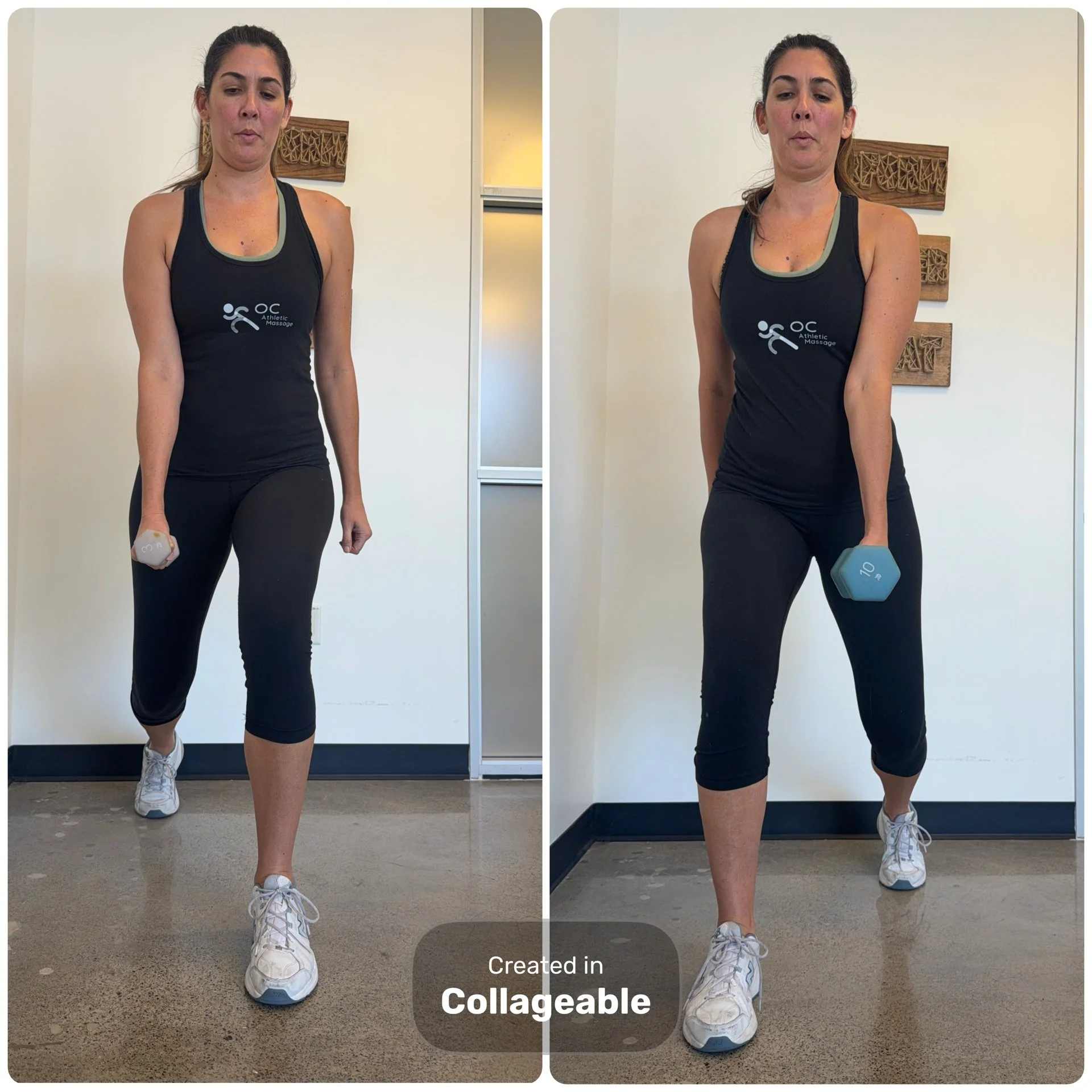
A loaded split squat is one way to compare how each side handles a similar single-leg demand. I’m looking at how much load each side can tolerate, whether one side fatigues sooner, and if there’s a difference from left to right.
That matters because running repeatedly asks each leg to accept load, support your body, and produce force.
It doesn’t mean both sides need to be perfectly symmetrical. Humans aren’t perfectly symmetrical. And it doesn’t mean knee pain in the first mile automatically points to you being weak.
It means strength is something worth measuring instead of assuming.
If a meaningful strength gap shows up and it lines up with the person’s symptoms or movement, that gives us a much clearer direction for programming.
If strength capacity appears to be the limiting factor, simply adding more running may not solve it. Building lower-body strength alongside your running may make more sense than continuing to ask the same system to tolerate more mileage.
Why Does My Knee Hurt Running Downhill?
Some runners feel fine going uphill or running on flat ground, but their knee hurts as soon as the route starts heading downhill. That difference matters.
Running doesn’t only require you to produce force to move forward. Your body also has to absorb and control force as you land and slow yourself down.
Downhill running increases that braking demand, which is one reason knee symptoms can become more noticeable on descents. Pain going downhill or downstairs is also commonly reported with patellofemoral pain. This is where I may start looking at deceleration capacity.
Can you control yourself as you lower? Can you accept load without simply dropping into the movement? Can you maintain that control repeatedly?
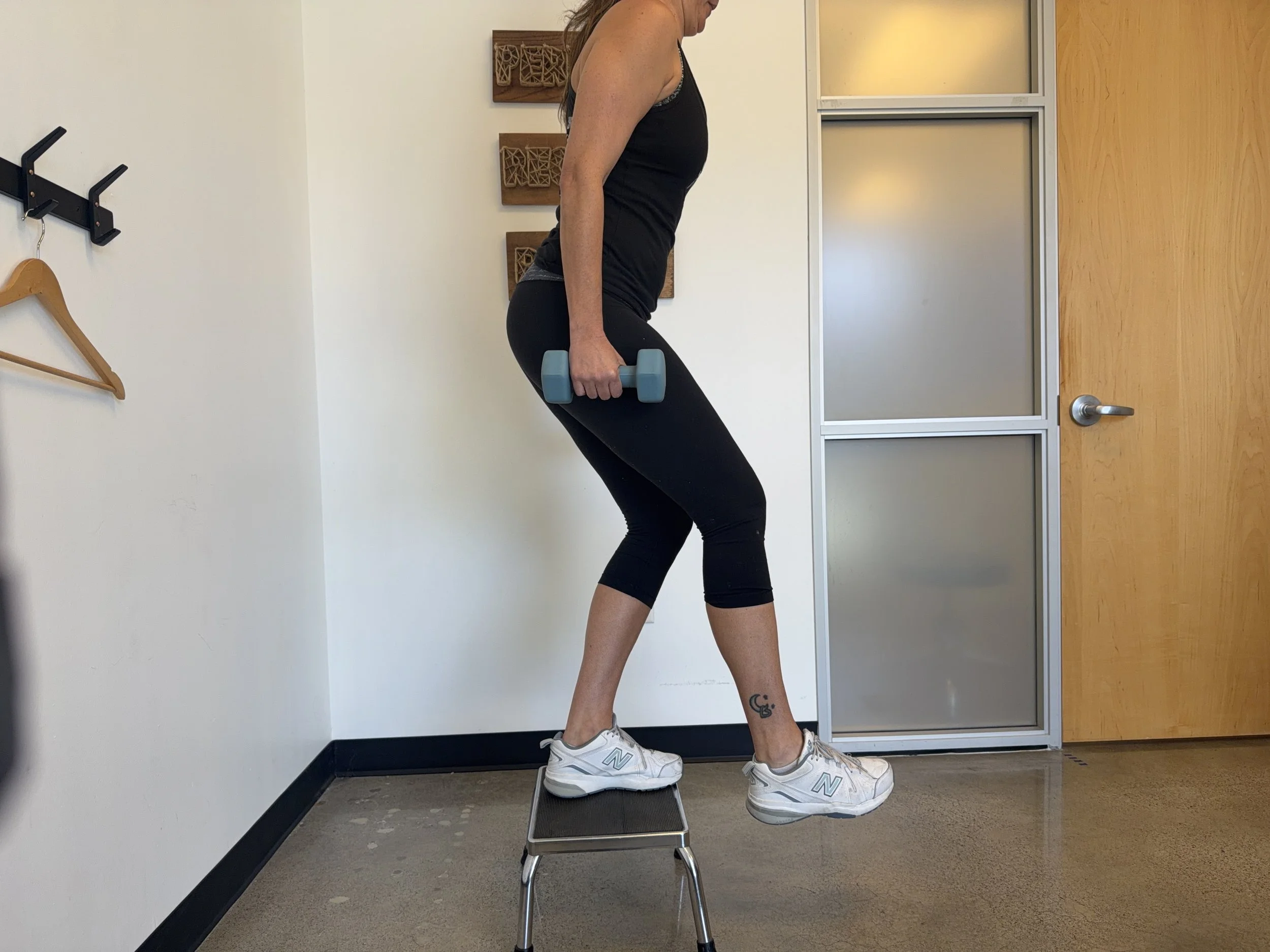
A step-down or low-box step-off can give information about how someone manages that demand. And you can pay attention to the same thing in the gym.
If you're using a weight that causes you to rush the lowering phase, lose your range, shift significantly, or rely on momentum just to finish the rep, ask yourself whether you're actually controlling the load—or simply getting through it.
That doesn't mean every rep needs to look perfect. But adding more weight isn't automatically useful if you've exceeded the load you can currently control.
If downhill running consistently brings on knee pain, the goal isn't necessarily to avoid hills forever. It may mean temporarily adjusting the dose while building your ability to absorb and control force.
Does Range of Motion Affect Knee Pain While Running?
Sometimes. Running requires motion from more than just the knee. Your hips, knees, ankles, pelvis, and trunk all have to work together with every stride.
That doesn’t mean limited hip or ankle range automatically causes knee pain. But if one area doesn’t have access to the motion the activity requires, your body still has to find a way to keep moving.
One assessment I may use is a kneeling heel-to-butt test. I’m looking at how much knee-flexion range is available from left to right, but I’m also watching what happens everywhere else as you move.
Can you bring the heel toward the butt without the pelvis shifting? Does one hip move away from the working side? Is there a noticeable difference in range between legs?
Those changes don’t automatically tell me what’s wrong. They give me another piece of information to compare with your strength, symptoms, and the way you actually run. The goal isn’t to make every joint perfectly symmetrical. It’s to determine whether you have enough usable range for what you’re asking your body to do—and whether you can control that range once you have it.
The same is true at the hip. Hip range of motion can influence how you organize movement farther down the leg, which is why I don’t assess the knee completely in isolation.
Do your hips shift when you bend the knee? I break down what that can look like and what I pay attention to in my hip-shift series on Instagram
Knee Pain After Running: What Happens Later Matters Too
The run itself isn’t the only thing I care about. Maybe your knee feels pretty good while you're running but starts aching later that afternoon. Maybe you wake up stiff the next morning. Or maybe each run feels manageable, but your symptoms gradually build throughout the week.
That response matters because it gives information about how well you tolerated the overall dose. A workout can feel fine while you're doing it and still be more than your body was ready to recover from.
That doesn’t necessarily mean running is the problem. Sometimes it means the combination of mileage, intensity, frequency, sleep, stress, and recovery has exceeded your current tolerance.
This is also where recovery strategies can be useful. Good recovery doesn't have to be complicated or expensive. Sleep, nutrition, hydration, easy movement, and appropriate time between harder sessions still matter. Tools such as heat, cold, contrast therapy, and massage may also help you feel better between training sessions—but they don’t replace building the physical capacity your running requires.
If you want to go deeper, you can read my guide to recovery and contrast therapy, where I also cover simple recovery strategies you can use for free.
If soreness or muscular tension is becoming the limiting factor between training sessions, you can learn more about Sports Massage in Newport Beach and where massage may fit into the bigger recovery picture.
Knee Pain While Running? Start With Better Questions
Two people can point to the same spot on their knee and need completely different things. One may have a strength-capacity gap. Another may feel fine for several miles before endurance becomes the limiting factor. Someone else may struggle most with downhill running and force absorption. Range of motion, training volume, and recovery can add even more pieces to the picture.
That’s why I don’t think the first question should always be: “What exercise fixes knee pain?”
A better place to start is: What can your body currently tolerate, what does your goal require, and where is the gap between the two?
Once you understand that, your training becomes much less about guessing.
Want to Learn More?
If knee pain is getting in the way of your running—or you’ve finished physical therapy but still don’t feel ready for the mileage, pace, or activities you want to return to—learn more about my post-physical-therapy training approach.
And if you’re not sure whether it’s the right fit for you
I can help you figure out what the next step should look like.